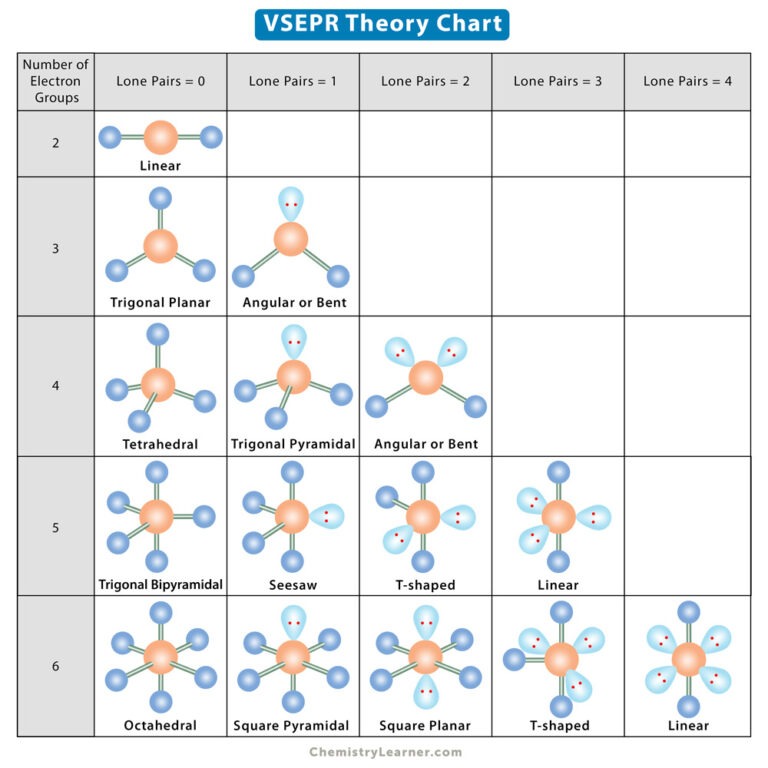
Interactive visual scenes for chemical bonding: ionic transfer, covalent sharing,
VSEPR electron-pair repulsion, and sp3 hybridization.
Use them as teaching aids or quick revision visuals.
Ionic Bond Formation
Sodium transfers one valence electron to chlorine. After transfer, Na+ and Cl- attract electrostatically.
Na
Cl
Metal atomNon-metal atomTransferred electron
Metal loses electron and forms a cation.
Non-metal gains electron and forms an anion.
Opposite charges create the ionic bond.
Covalent Bond Formation
Two hydrogen atoms move close enough to share a pair of electrons. The shared pair creates a stable single bond.
H
H
Hydrogen atomsShared electron pair
This scene represents electron sharing rather than electron transfer, which is the key distinction from ionic bonding.
VSEPR Repulsion in Water
Electron pairs around oxygen push apart. Two lone pairs occupy more space, forcing the bond pairs down and giving water its bent shape.
O
Central atomBond pairsLone pairs
Repulsion order: LP-LP > LP-BP > BP-BP. That is why H2O is bent instead of linear.
sp3 Hybridization
One s and three p orbitals mix to form four equivalent hybrid orbitals directed tetrahedrally, as in methane.